
Skin Checks At Home: How To Look For Signs Of Melanoma
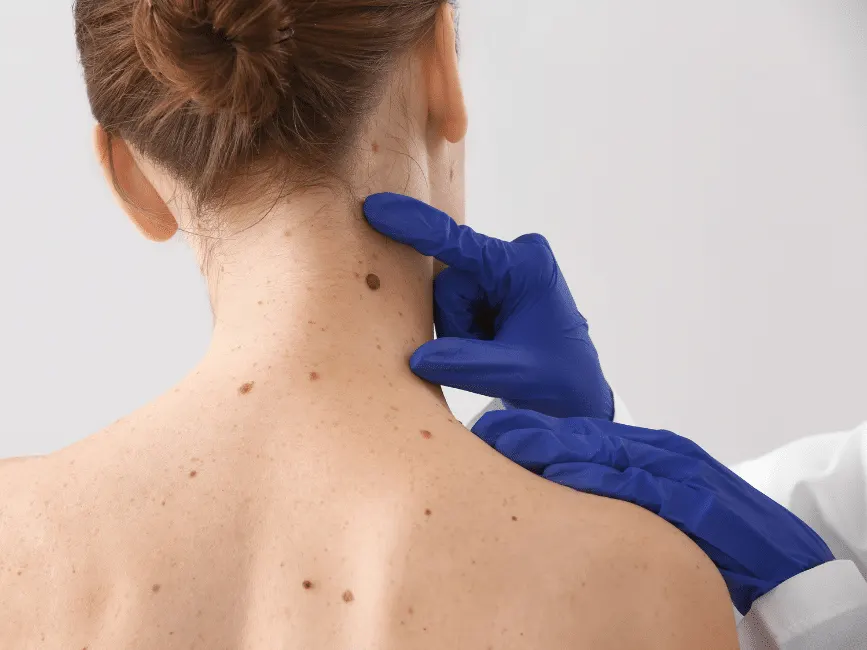
Checking the skin at home can help detect early warning signs of skin cancer before they become more serious.
At First OC Dermatology, patients are cared for by a team of board-certified dermatologists with extensive training and experience, including Dr. Tien Nguyen, who has more than 30 years of dermatology experience, Dr. Vivian Laquer, who trained at Columbia University and UC Irvine, Dr. Brent Martin, a board-certified dermatologist and Mohs surgeon, and Dr. Samantha Tran, a board-certified dermatologist specializing in medical, pediatric, and surgical dermatology.
With a strong clinical and research background, this team helps patients in Irvine, CA, recognize suspicious changes and seek timely evaluation for melanoma and other forms of skin cancer.
Why At-Home Skin Checks Matter
Skin cancer can develop in areas that may not cause pain or obvious symptoms at first. Melanoma is one of the most serious types of cancer because it can spread quickly if not caught early. Regular self-checks help patients become familiar with their skin, so new or changing spots are easier to notice.
At-home checks are especially important for those with higher risk factors, such as:
- A personal or family history of skin cancer
- Frequent sun exposure
- A history of blistering sunburns
- Fair skin or many moles
How To Check Skin At Home
A monthly skin check is a practical way to monitor changes. A full-length mirror, a hand mirror, and bright lighting can make the process easier.
Examine the body from head to toe, including the:
- Face and ears
- Scalp
- Chest and back
- Arms and hands
- Legs and feet
- Soles, toes, and under nails
Taking photos can also help track changes over time and make it easier to compare spots from month to month.
Signs Of Melanoma To Watch For
Melanoma may appear as a new mole or a change in an existing spot. One of the most common ways to evaluate a lesion at home is the ABCDE guide:
- Asymmetry
- Border irregularity
- Color variation
- Diameter larger than about 6 millimeters
- Evolving size, shape, or sensation
Other concerning signs include itching, bleeding, crusting, or a sore that does not heal. Any of these changes should be taken seriously, especially when evaluating possible skin cancer.
When To Have A Spot Examined
A home check is useful, but it does not replace a professional skin exam. Dermatologists can evaluate suspicious lesions more closely and determine whether further testing or treatment is needed. Prompt evaluation is especially important when melanoma is a concern because early diagnosis can improve treatment outcomes.
Melanoma And Skin Cancer Checks In Irvine, CA
Regular self-checks can play an important role in spotting changes early, but expert evaluation is still essential for melanoma and other forms of skin cancer.
To schedule a consultation, call the Fountain Valley office at 714-531-2966 or the Irvine office at 949-679-9994.
Want Beautiful, Clear Skin? It Starts Here.
Come See Us Today!
-
Fountain Valley
17271 Brookhurst St, Fountain Valley, CA 92708Monday – Friday: 8:30 AM – 6:00 PM
Saturday – Sunday: Closed -
Irvine
17305 Von Karman Ave, #107, Irvine, CA 92614Monday – Friday: 8:30 AM – 6:00 PM
Saturday – Sunday: Closed
The form is loading. If it does not appear, call (714) 531-2966.